
A recent Nottingham Level 3 building survey highlighted the value of instructing an experienced surveyor.
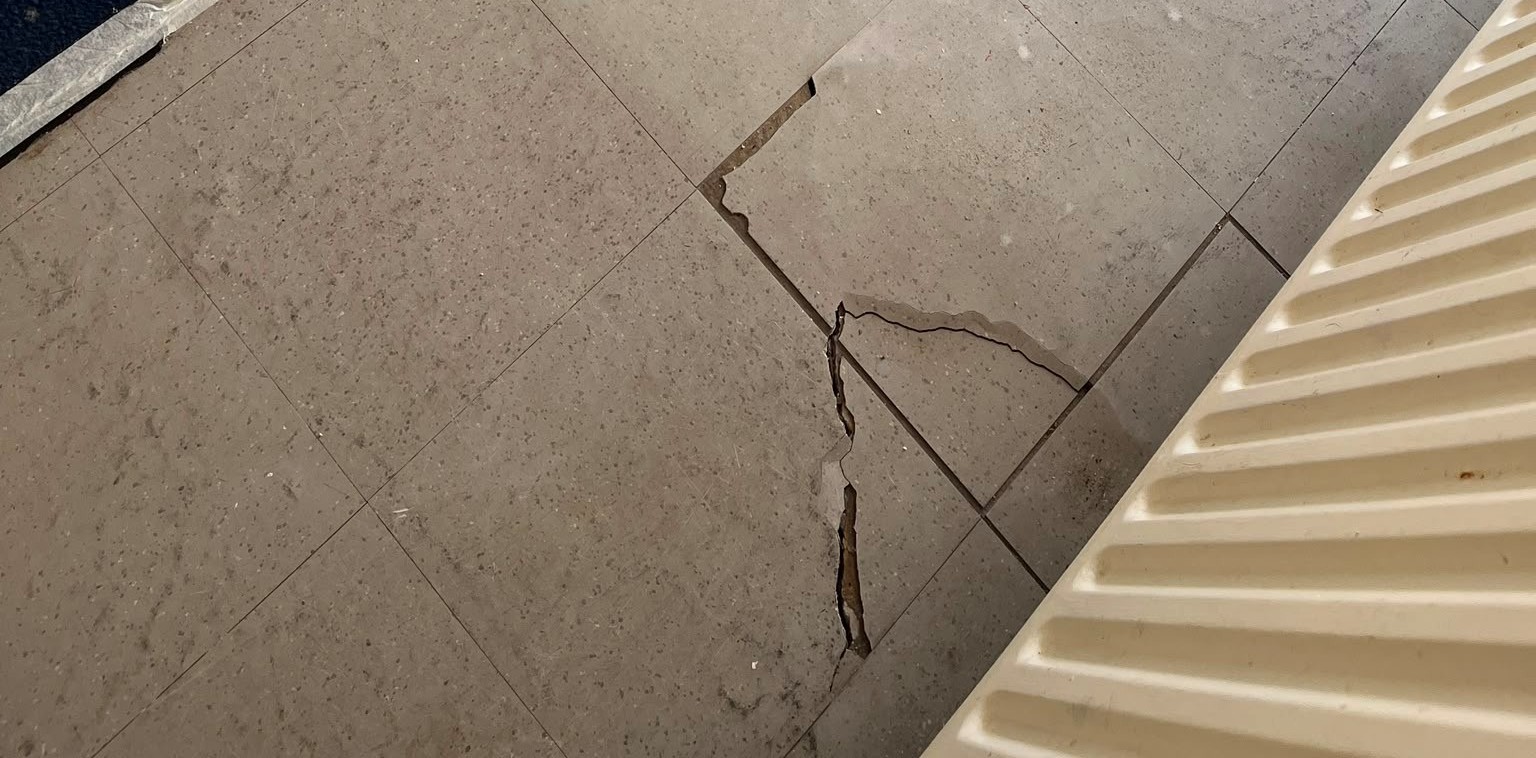
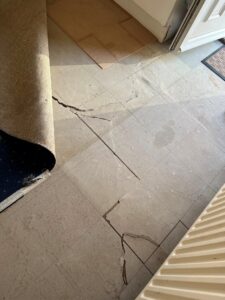
In this case, during a building survey of a 1950s Nottingham home, lifting a loose carpet revealed significant cracking in the flooring below. The cracks were not limited to the vinyl tile, but penetrated down into the cement slabs below.
While this could be caused by poor quality construction of the floor slab, the age and location of the property led our surveyor to suspect sulphate attack. Structural movement spotted by the surveyor in an external wall added further suspician that sulphate attack could be the culprit.
What is sulphate attack?
Sulphate attack is leakage of sulphates from the building material underneath the floor into the concrete floor slab above. The sulphate and concrete react, causing the concrete to expand and crack.
Importance of identifying sulphate attack before purchasing a house.
Sulphate attack can be an expensive issue to rectify, and so it pays to know whether or not a property is affected before buying. As well as damaging the floor slab, it can as cause cement slabs to swell, pushing walls outwards.
Assuming the walls haven’t been damaged structurally, the solution is to dig out the slab and the sulphate-rich hardcore, and replace with modern materials. While this is an costly and messy job, it does provide an opportunity to upgrade the under floor insulation and add a damp-proof membrane.
Caution is required in floor tiles in a property built in the twentieth century, because of the use of asbestos in building materials. These should be sampled prior to disposal, so that appropriate safety measures can be used if necessary.
Sulphate attack in Nottinghamshire
Nottingham was a mining area so they used the colliary shale and industrial waste when looking for a cheap material for the rapid building required in the post-war period. Many of these materials contain high levels of sulphates, and when used adjacent to concrete without an intact damp-proof course in between, they can cause a chemical reaction that results in the swelling of the concrete slab. This in turn leads to cracking and structural defects.
An RICS building survey will look for signs of sulphate attack and will comment on the likelihood of a property being at risk of sulphate attack, based on its location, age and construction type.