
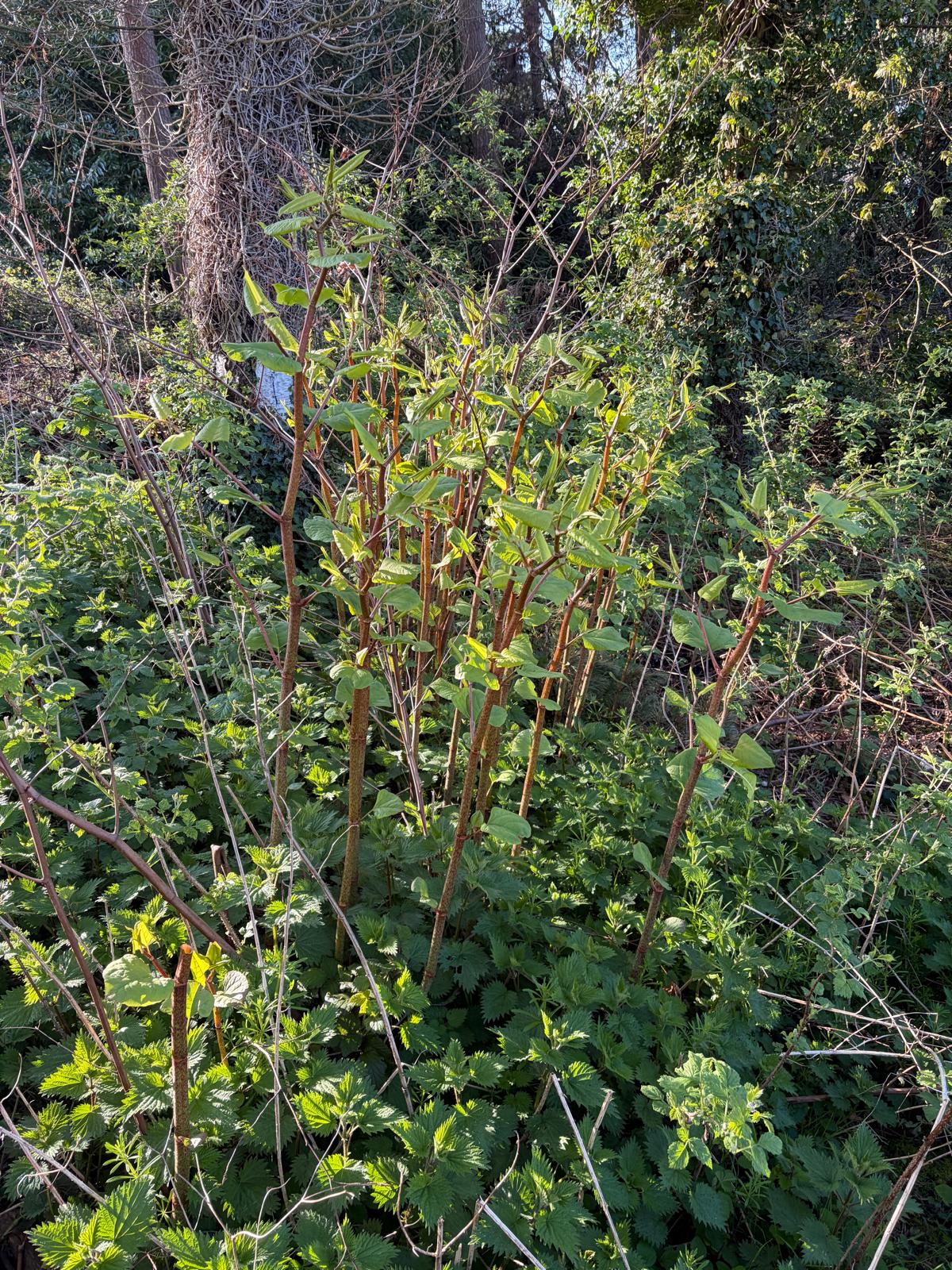
It’s spring: the time of year when our surveyors start to see Japanese knotweed growing and coming into leaf. While the plant can be hard to spot in the winter months, the spring growth means that now is a good time to check if Japanese knotweed is present in your garden.
Japanese knotweed initially emerges as distinctive red or purple asparagus-like shoots; in some colder, northern regions, the plant may still be at this stage. However, as we have recently seen in the Midlands, in many areas Japanese knotweed is now growing rapidly and in leaf, making it a lot easier to spot.
That means that now is the prime time for homeowners and prospective buyers to inspect gardens and boundaries. If you are unsure of the signs, our guide to identifying Japanese knotweed covers exactly what to look out for throughout the year.
Historically, the presence of Japanese knotweed has caused considerable anxiety for property owners and buyers, largely due to widespread claims about its ability to cause severe structural damage. However, as we have previously discussed, modern guidance provides a more measured perspective. The latest framework from the Royal Institution of Chartered Surveyors (RICS) offers a reassuring reality check: it confirms that Japanese knotweed rarely causes significant structural damage to sturdy, well-built properties, and that historic fears have been somewhat exaggerated.
While it is no longer viewed as the structural menace it once was, the plant still requires careful management. It can occasionally disrupt lightweight structures, boundary walls, or drains, particularly if it can take advantage of existing cracks. Furthermore, it remains difficult to completely eradicate without specialist help. Because of this, alongside the lingering stigma surrounding the plant, its presence can still affect a property’s market value and pose challenges when securing a mortgage if an approved treatment plan is not already in place.
For those looking to purchase a home this spring, practical and proactive measures are the best approach. In addition to commissioning a comprehensive property survey to look for visible signs of the plant, it is vital that buyers ask their conveyancer to make thorough enquiries. Your solicitor should carefully review the TA6 property information form and ask the vendors whether they have any knowledge of the current or previous presence of Japanese knotweed. Catching the issue early means an effective management plan can be agreed upon, turning a potential headache into a manageable, routine process.