
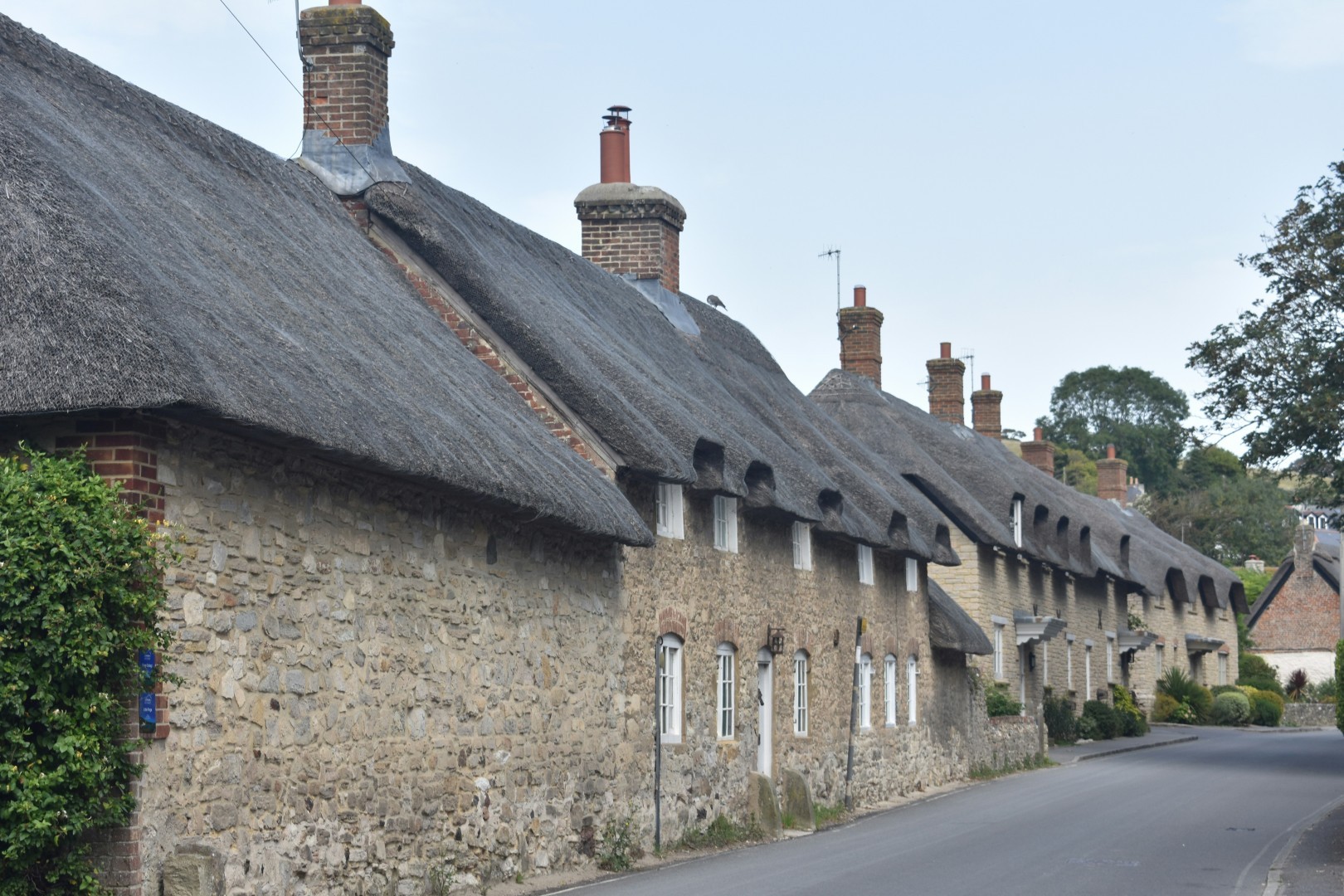
Newly refurbished properties can be very impressive, and it can be tempting to assume that behind the glossy finish, the bones of the property are structurally sound. However, as we’ve seen before, appearances can be deceptive.
A recent visit to a beautifully refurbished 18th century cottage highlighted the value of getting a building survey. Internally, it looked immaculate. The internal walls were lined with plasterboard, creating a perfect finish.
However, we found that these boards were concealing potentially serious issues with damp, that had formed as a result of the inappropriate use of modern materials in the renovation works. Fixing the problems would run into the tens of thousands of pounds; only feasible if the buyer had factored that into their budgets, or could negotiate a reduction in the purchase price to cover the costs of the repairs.
Homeowners often invest heavily in well-meaning ‘improvements’, but if the wrong materials are used, it can cause far more harm than good.
The Problem
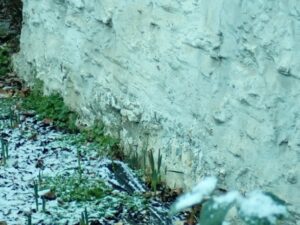
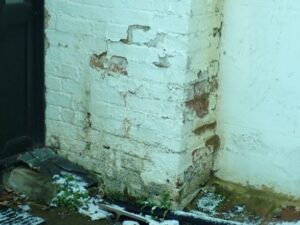
In this case, the use of cement mortar when re-pointing externally had created a sealed environment, stopping the natural cycle of water absorption and evaporation through the walls. The hardness of the cement also inhibited the natural expansion and contraction of the stone, leading to accelerated deterioration of the stone itself.
The cement render added on top of the stonework compounded the issues. Water enters through hairline cracks in the cement. It is then absorbed into the stone and cannot evaporate efficiently through the impermeable render coating.
Finally the external ground levels had been built up over the years to the extent that they were now higher than the internal floor level, encouraging water ingress above floor level.
However, none of these issues were visible inside the property, because of the boarding that had been used to line the internal walls. Without the surveyor using their experience and knowledge to identify this hidden issue, it would have gone undetected until the damp got so severe that it seeped though the wall linings. By that point, it would also have caused serious structural damage.
Recommendations
The first step in restoring the normal balance of moisture in a property like this would be to lower the external ground level. This is the quickest and least expensive measure and so worth trying first to assess how much of an effect it has on the condition of the building.
It is highly likely that removal of the cement render would also be required to prevent significant damp. This is, however, a much more significant job than altering the ground levels, and could lead to damage to the stonework, with further associated costs.
To completely eliminate the damp problem, the cement mortar would also need to be replaced with lime. However, while lime is fairly soft and can be raked out fairly easily, it is not normally possible to rake out cement without damaging the surrounding stonework. Replacing this mortar is therefore unlikely to be feasible, and occupiers of this property will need to expect a baseline level of damp.
The Building Survey
External
We carried out a level 3 building survey of this period property. Starting externally, we inspected the entire envelope of the house.
Our surveyor found multiple causes for concern. Many of these related to the passage of moisture into and out of the walls of the property; a common issue in older properties that have not been appropriately maintained.
Inappropriate non-breathable renders and paints had been used externally. These would be subject to ongoing deterioration resulting in above average maintenance. We could see that already the decorative finishes and render had begun to lift due to moisture trying to escape. Furthermore, until such time that the cement render is removed, it would trap moisture within the masonry walls, increasing the rate of deterioration and increase the risk of damp.
Where the decorative finishes have begun to lift the mortar pointing was probed and felt relatively hard, suggesting that the elevation had been repointed in cement. It is recommended that solid walls such as the ones at this property are repointed using a sacrificial soft lime mortar. This allows moisture to naturally escape and reduces the risk of damp ingress and premature perishing of the masonry. We however did not consider it feasible to rake out the existing mortar and replace with lime due to the associated cost and potential damage to the stonework.
We also found that the external ground levels had been raised above the internal floor level which would increase the risk of damp ingress.
Internal
Following the external inspection, our chartered surveyor was expecting to see substantial evidence of water ingress and damp inside the property. However, The internal walls have been lined, concealing any damp ingress.
The renovations meant that there was no damp evident internally. However, the use of inappropriate materials and raised ground levels externally will almost certainly be allowing moisture to permeate the property.
Another issue was that behind the wall linings, the main fabric of the building had probably deteriorated over the years, but this was impossible to assess because it had all been concealed.
We had no choice but to advise our client that until such time that the use of inappropriate materials externally and the raised ground levels have been addressed, there would always be an increased risk of damp, and they must accept this risk until such time that the inappropriate non-breathable materials have been removed.
If you require a thorough building survey of your period property then contact us on 0333 200 7198 or email info@allcottassociates.co.uk.